Six steps.
From context to action.
Your context is the only input. The Genome (every gap classified, every solution specified, every ROI case made) is what Known. derives from it. No guessing required.
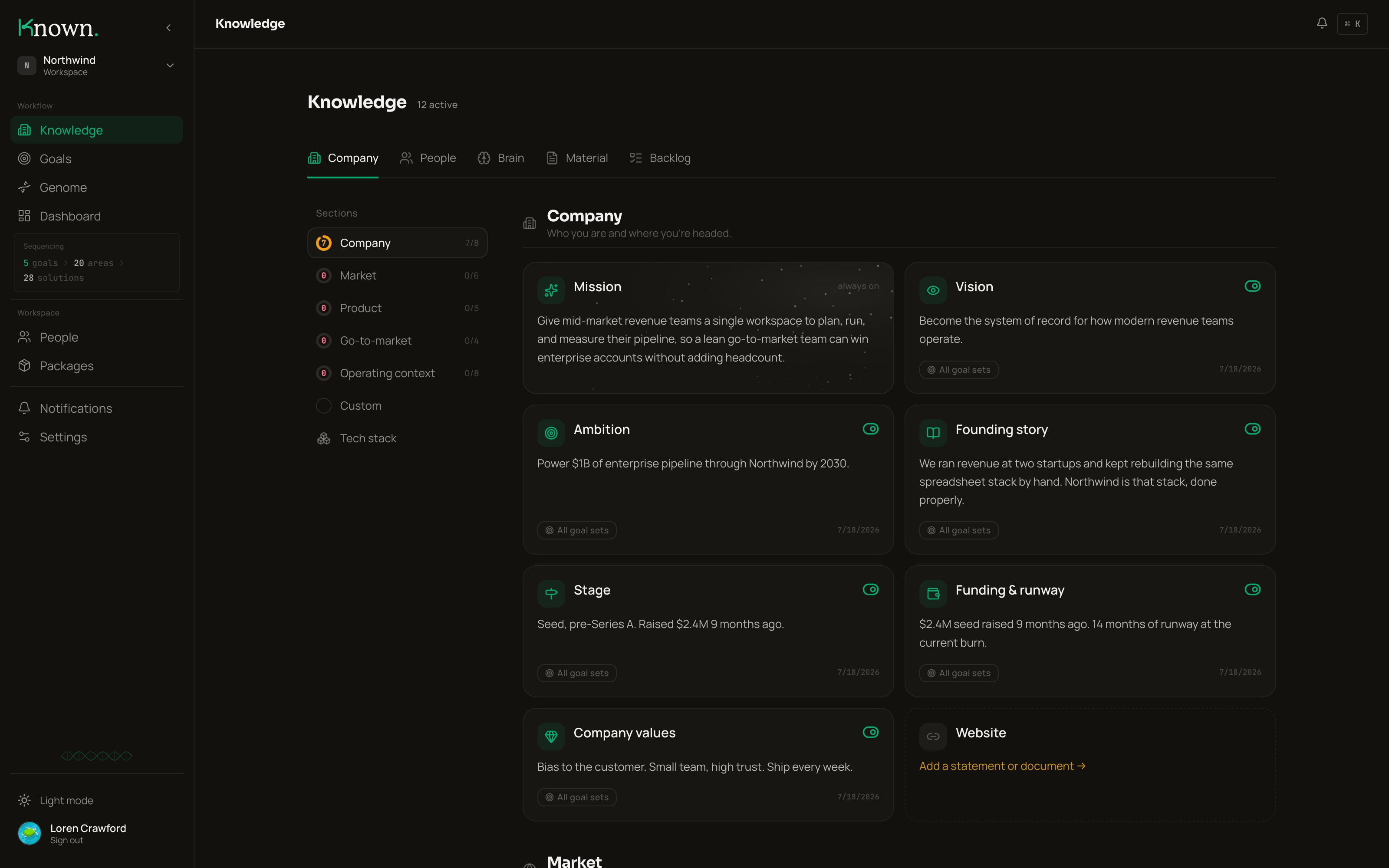
Give your context
It starts with your context, not the org chart.
Mission, stage, market, constraints, the tools you already run. Context is the only thing you supply, and it's the ground Known. reasons from, so the same goal in two companies produces a different genome.
Context
Seed-stage B2B SaaS · 8 people · selling into mid-market · 14 months runway.
Everything downstream (goals, capabilities, gaps, and packages) is derived from your context and traces back to it. Nothing is assumed off a template.
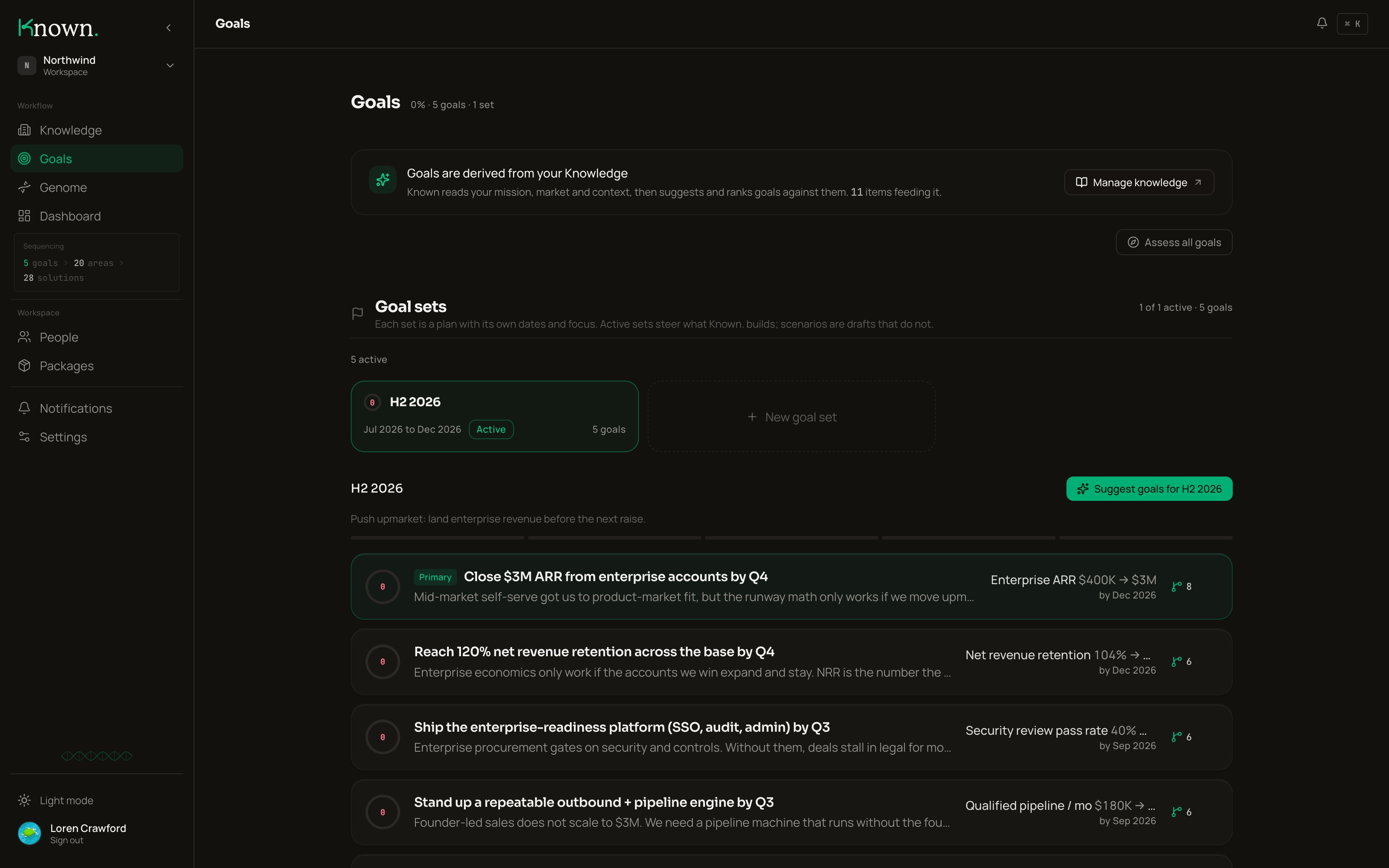
Known. derives your goals
The goals your context implies. You confirm and refine.
From your context, Known. proposes the strategic goals that matter, with a horizon for each. You edit and reprioritise. You own the final call. Every capability downstream anchors to these.
Derived goal
Close $3M ARR from enterprise accounts by Q4.
Goals aren't a blank form you fill in. Known. drafts them from your situation so nothing is missed, then you refine. Nothing is locked.
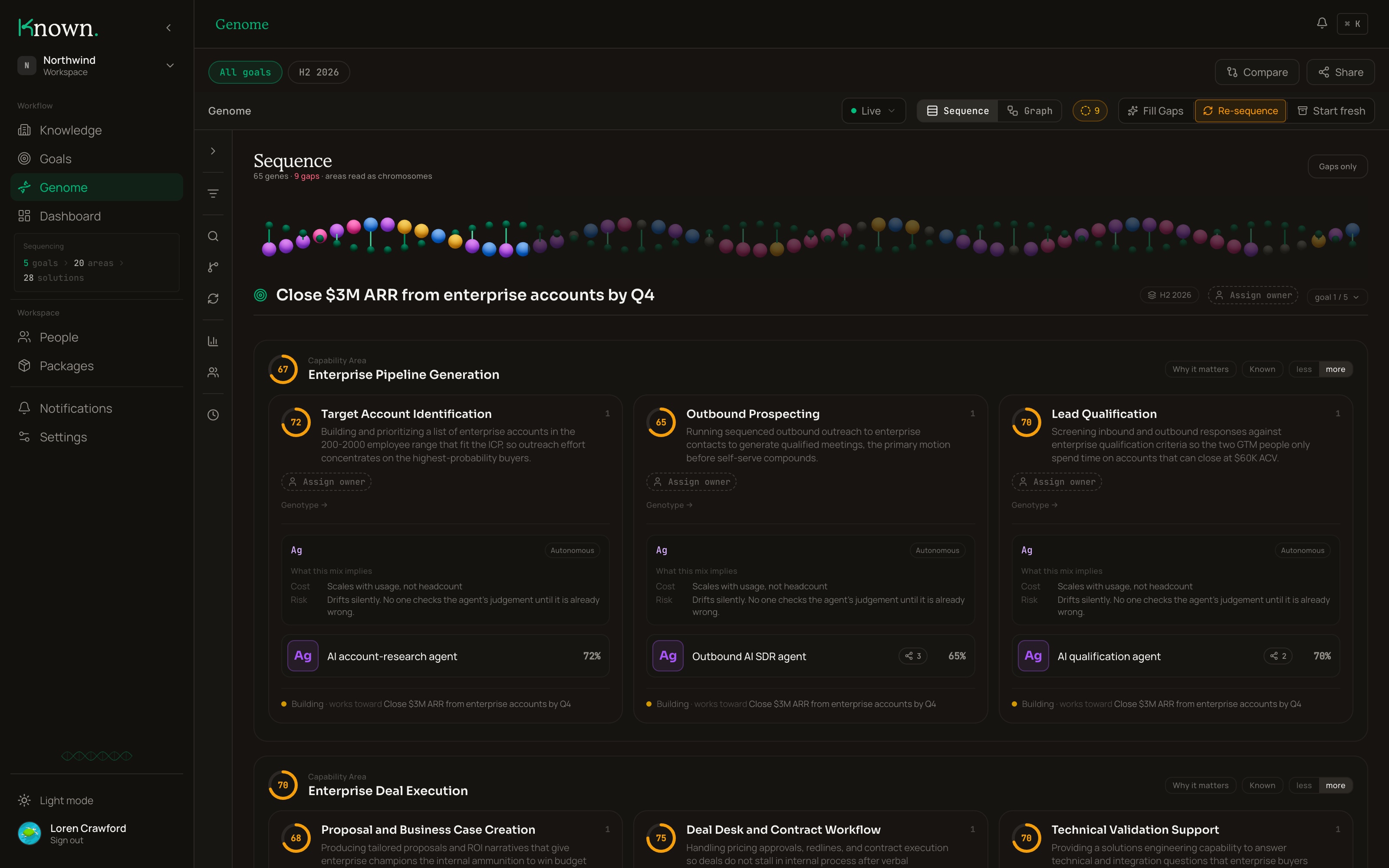
Read the genome
Your strategy compiled into a Genome.
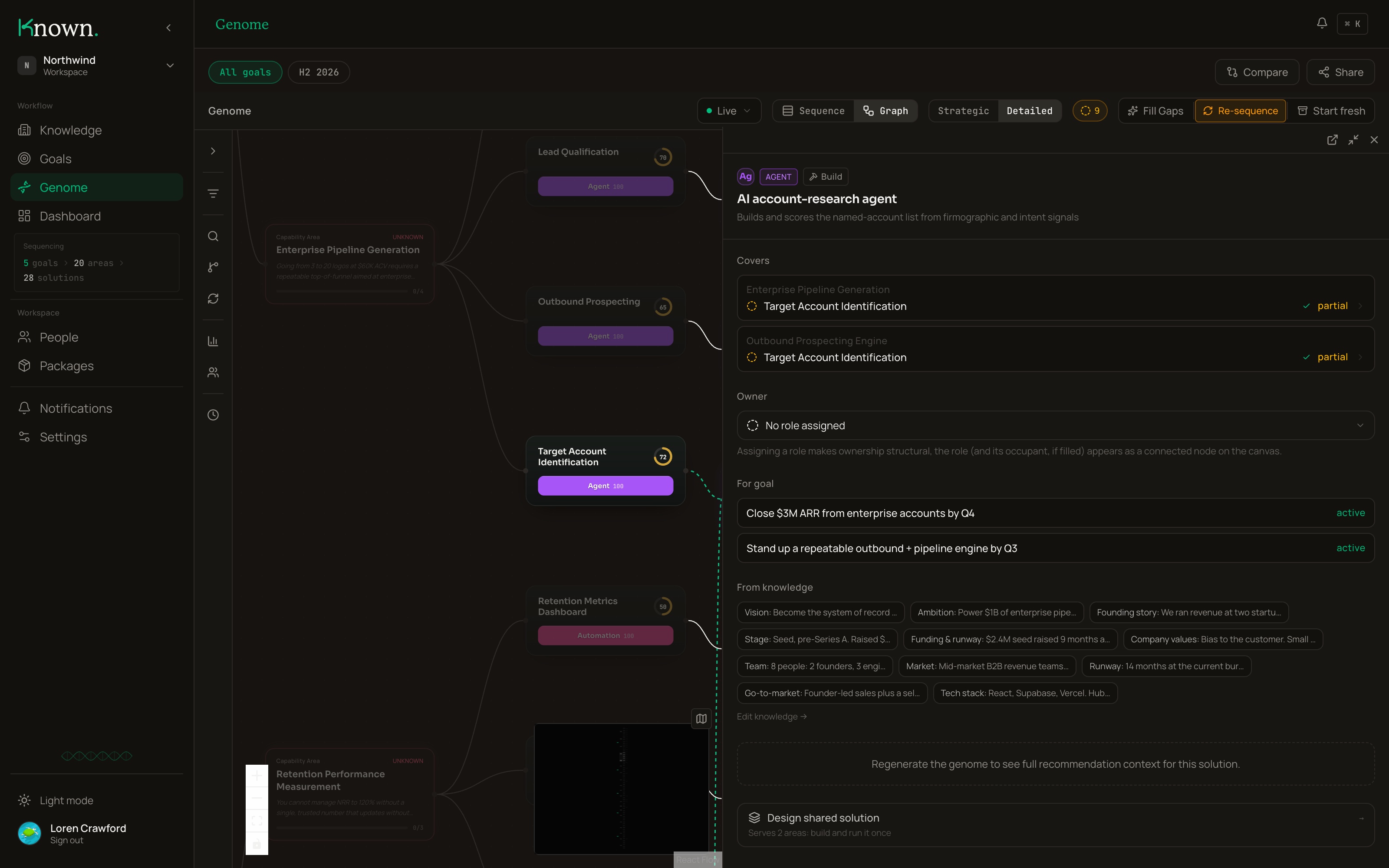
Known. maps the capabilities your goals demand and reads each one: expressed, dormant, or missing. Every capability is linked to the goal it serves, with a confidence score. Nothing is flagged without a strategic reason.
Sequence read
37 genes across 12 areas. Each one expressed, dormant, or missing.
This is the phenotype-vs-genome distinction in action: not the org chart you already have, but the capabilities your strategy actually requires. AI-generated, never built by hand.
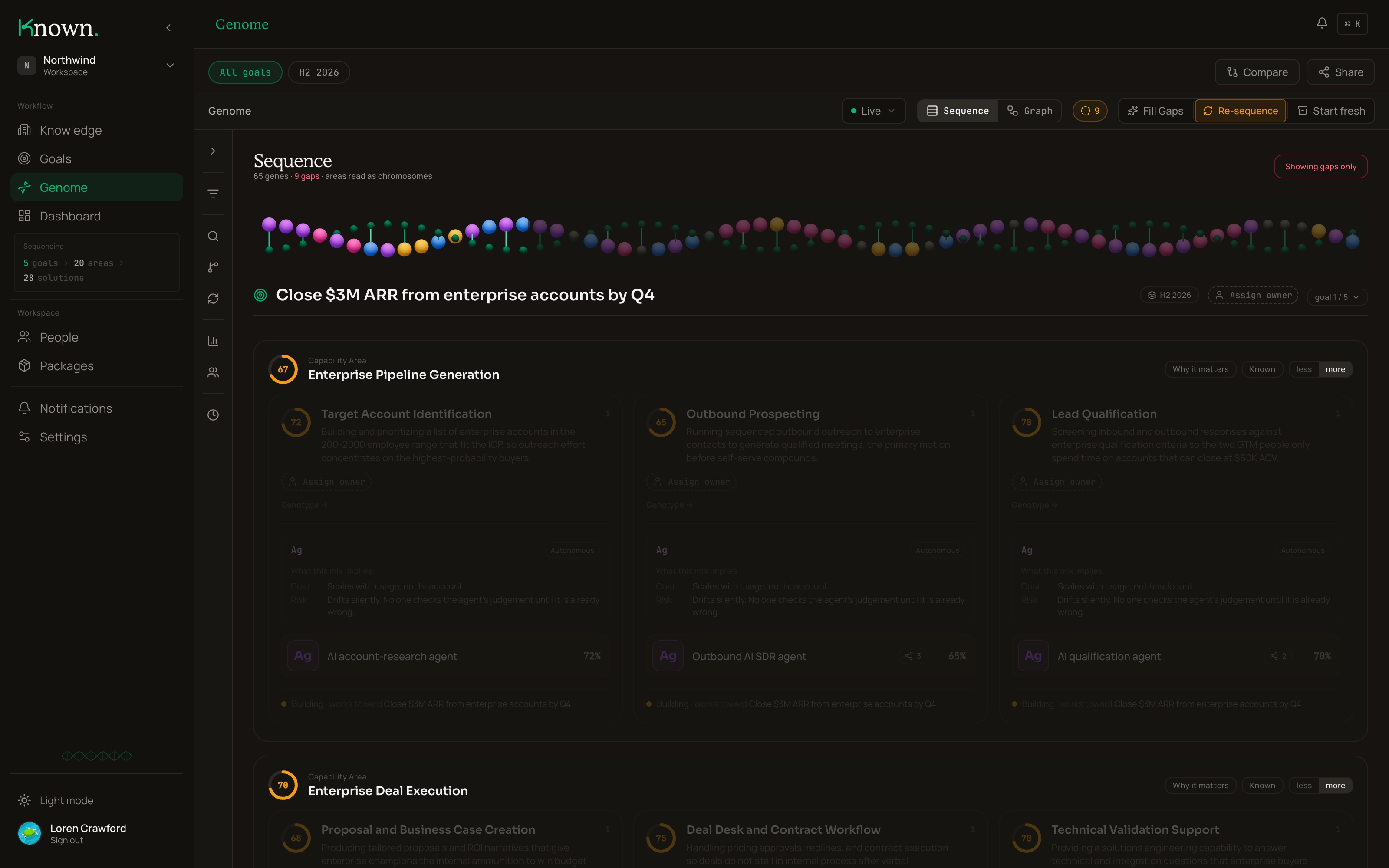
Find the gaps
Every missing gene, surfaced.
One click strips the noise. The capabilities you already cover fade back, and what's blocking each goal stands alone. Every gap carries the goal it blocks, so there's no orphan to-do list.
Gap surfaced
Enterprise POC & solution engineering: 40% known. Blocking the ARR goal.
A gap is never a vague worry. It's a named capability, linked to a goal, with a coverage score that says how exposed you are. That precision is what makes the next step possible.
Get the answer
One base, the ROI case, and a build-ready package.
Each gap reads as exactly one of the four bases (AI agent, automation, tool, or human), never a hire by default. Known. makes the ROI case and generates the full package in one click.
Classification
AI Agent · predicts churn weeks out and opens a save play. Grounded in your own knowledge.
It weighs all four bases and picks the one that fits, with cost and time-to-value to justify it: agent architecture, tool brief, playbook, or role spec. And when the answer is human, it picks the engagement that fits: contractor, partner, fractional, or a full-time hire when that's the right call.
It learns how you think
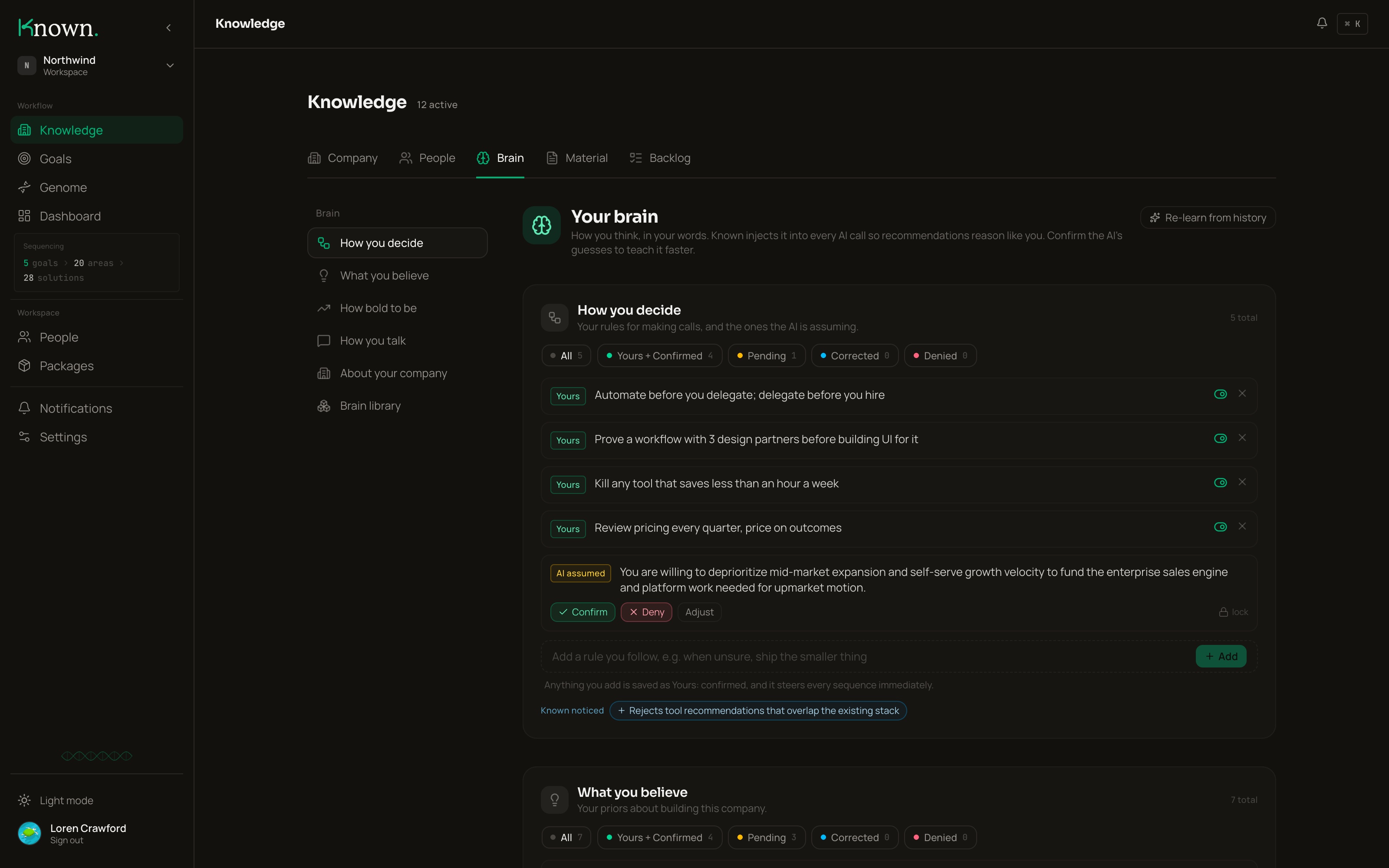
Your Operator Brain steers every answer.
Beliefs, rules, vocabulary, risk appetite: stated once, in your words. Known. injects your Brain into every AI call, so recommendations reason like you instead of like a template. Confirm or correct its guesses and it learns.
Known noticed
Rejects tool recommendations that overlap the existing stack.
Rulings stick. Once you've decided something, Known. doesn't ask again, and it flags contradictions instead of silently re-deciding. The more you use it, the more the answers sound like yours.
What Known. will never do.
Default to hire
Known. rules out AI agent, automation, and tool before it reaches for a human at all, and when it does, it picks the engagement that fits, up to a full-time hire when that's genuinely optimal.
Skip the goals
Every feature, every recommendation, every classification is anchored to a strategic goal. If there's no goal, there's no gap. The org chart never floats free of strategy.
Give you options
Known. gives you the answer, not a list of things to think about. One classification. One package. One recommendation. You decide whether to act.
Touch your org without asking
Every recommendation is staged, never applied. Known. never edits your live capability graph, hires anyone, or changes a role until you accept it.
Ready to see your org clearly?
Free during private beta. Takes five minutes to set up.